


Urban Intervention | Amsterdam | 2017
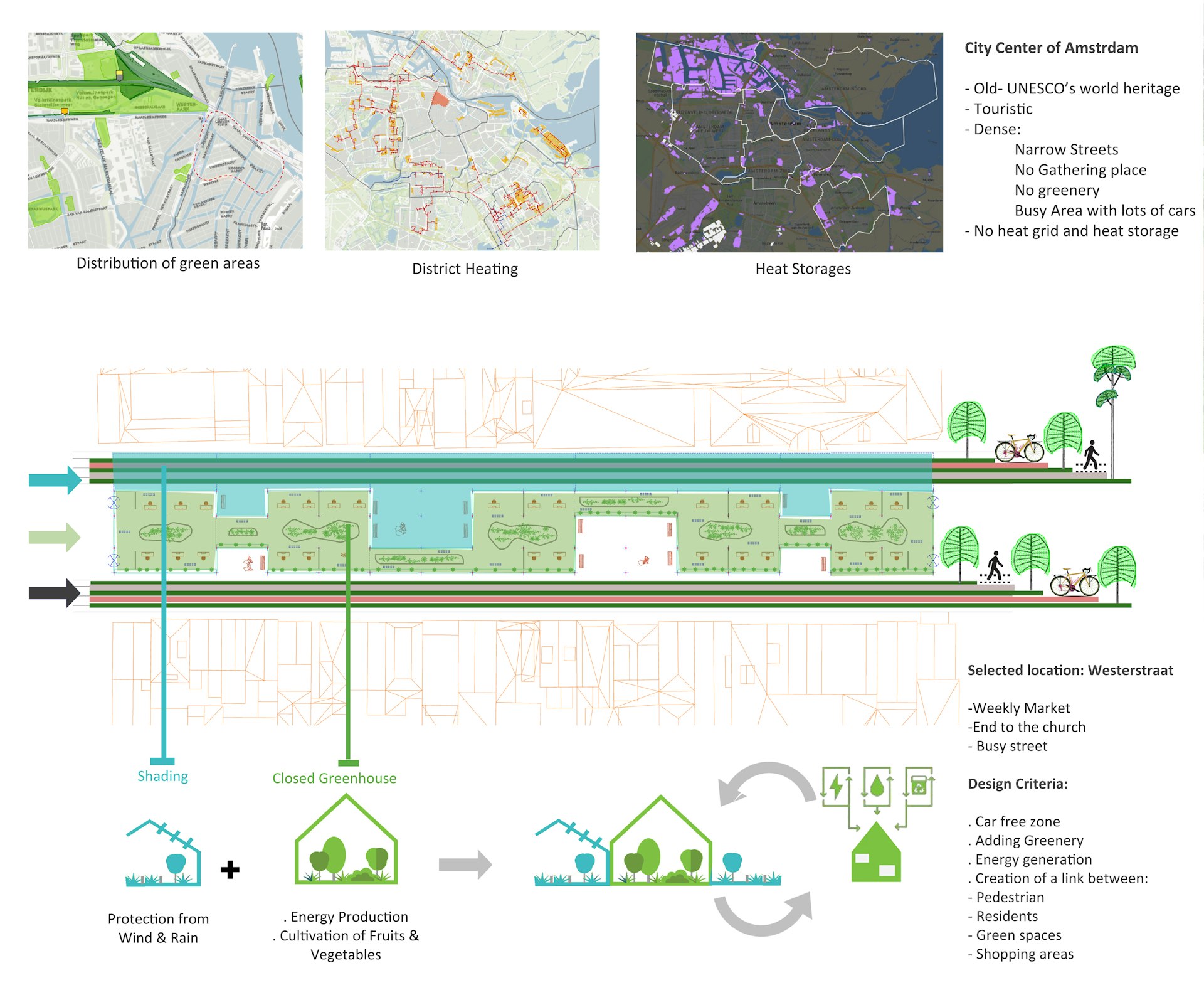
This project explores new directions for a sustainable urban environment through a design methodology that combines theoretical research, technological innovation, and environmental intelligence. Bahareh aimed to develop adaptable spatial strategies that could be implemented directly within the existing urban fabric of Amsterdam.
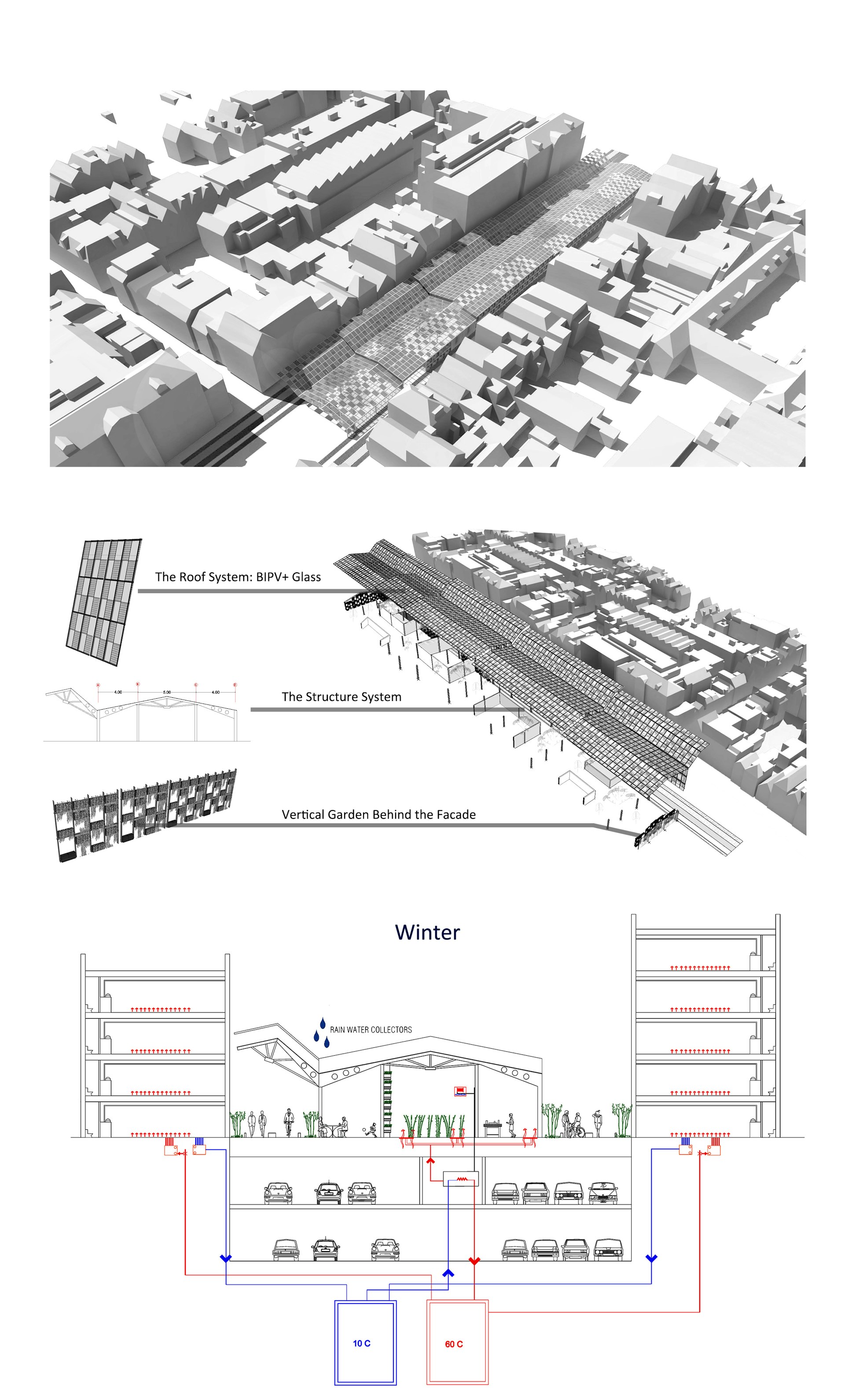
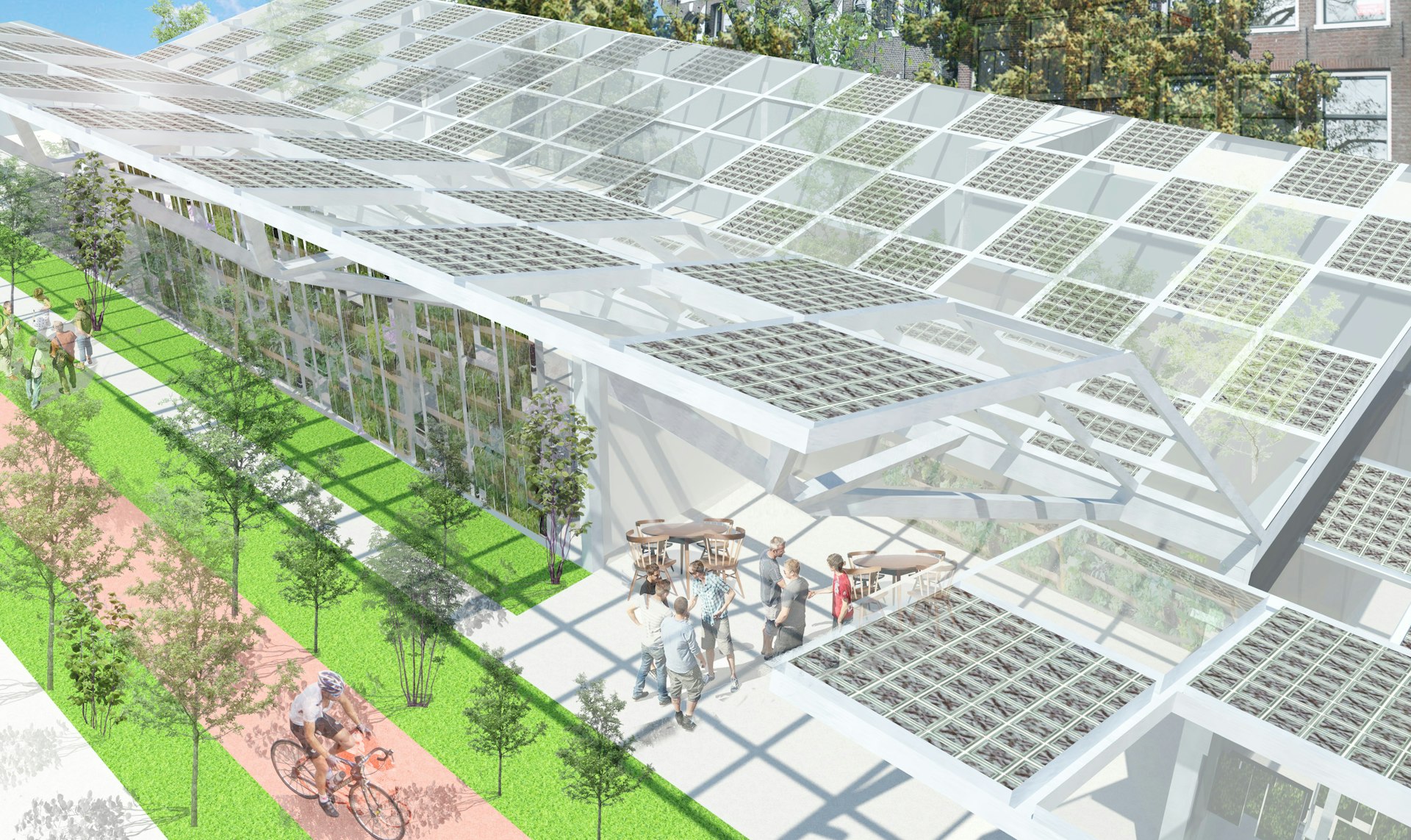
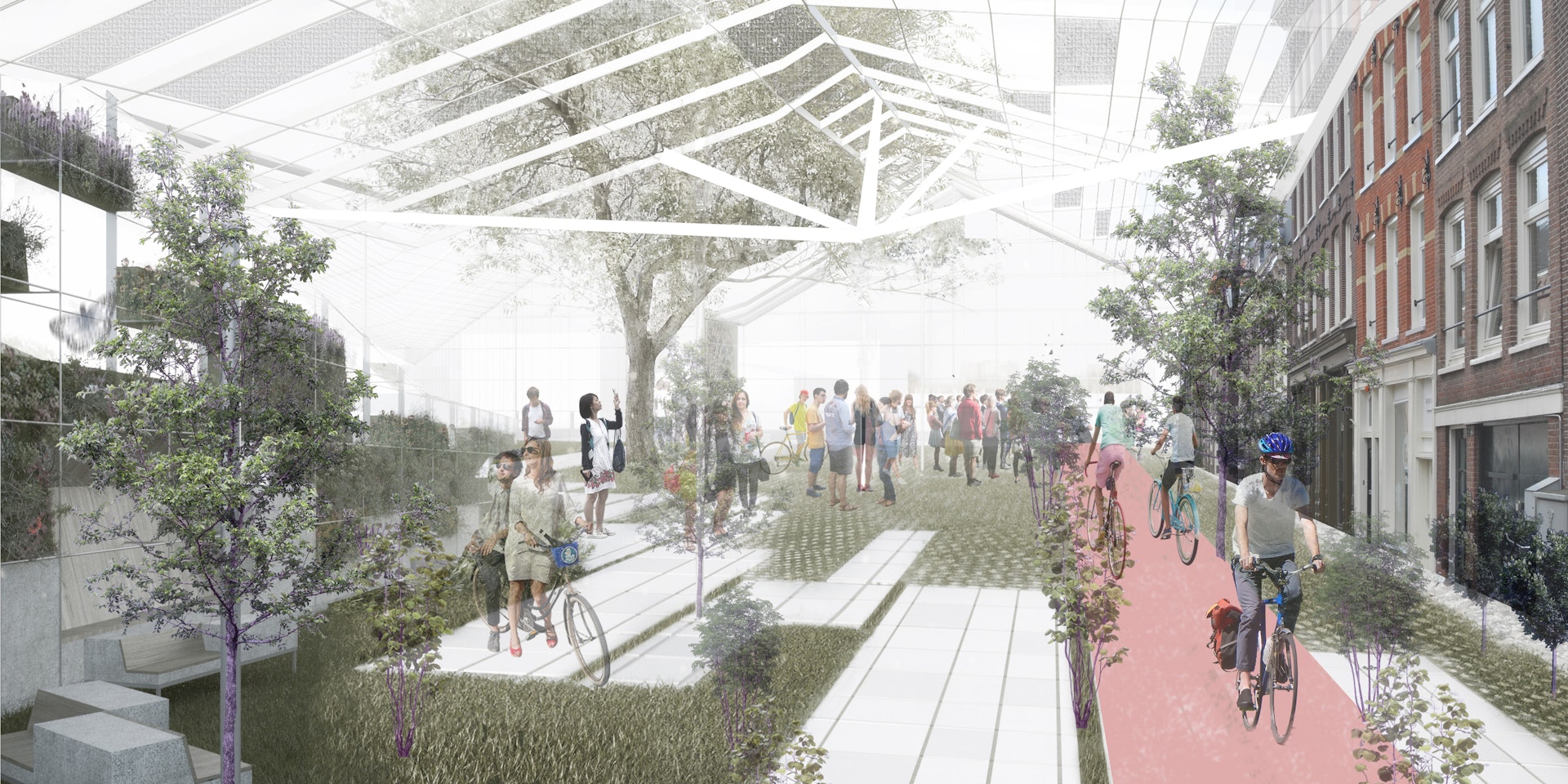
The intervention focuses on three key objectives: reducing fossil fuel dependency, introducing public green spaces, and establishing a new local energy system. Bahareh transformed a car-free street into a multi-functional public zone covered by a greenhouse. This volume serves a dual purpose: it functions as an active energy-generating element and creates a vibrant market for locally grown fruits and vegetables.
To enhance the system's performance, a shading structure equipped with Building Integrated Photovoltaics (BIPV) is attached to the greenhouse. This addition generates electricity while providing essential protection from wind and rain for pedestrians. The result is a fully integrated system that weaves public space, food production, and renewable energy into the daily life of the city.