


Technical Research | TU Delft | 2017
Developed at TU Delft, this project explores the potential of energy-neutral design within the Dutch context. Bahareh conducted a comprehensive energy analysis of the site to inform a retrofit strategy based on the stepped strategy (Reduce, Reuse, Produce). The primary objective was to minimize energy demand while maximizing the use of renewable resources to achieve a net-zero energy balance.
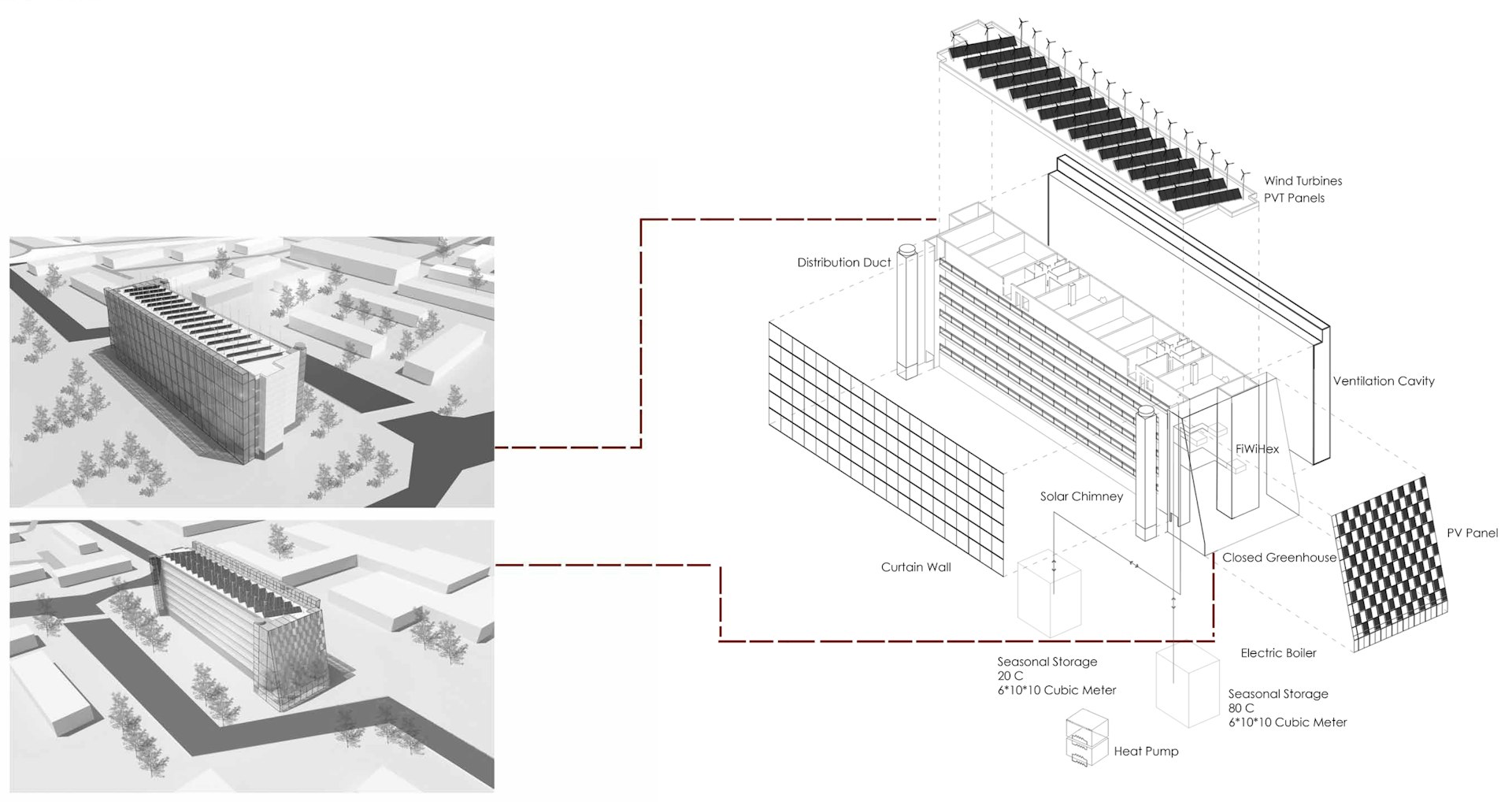
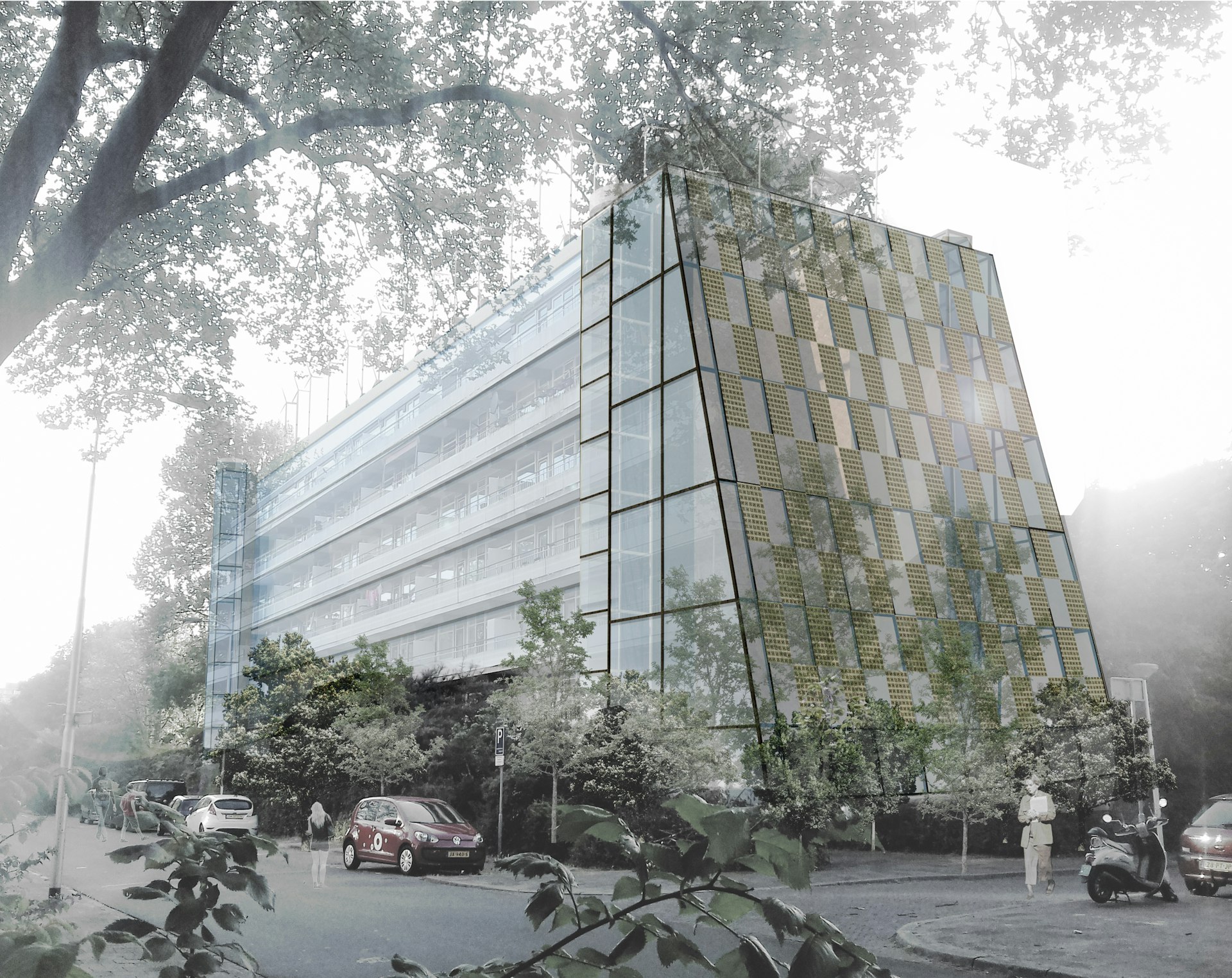
The design interventions include a closed greenhouse, curtain walls protecting the southeast balconies, and two glass solar chimneys that flank the facade. Bahareh integrated these architectural elements with technical systems such as urban wind turbines and roof-mounted PVT panels. To validate the efficiency of these measures and evaluate projected consumption, she conducted rigorous performance simulations using Uniec and Ces software.
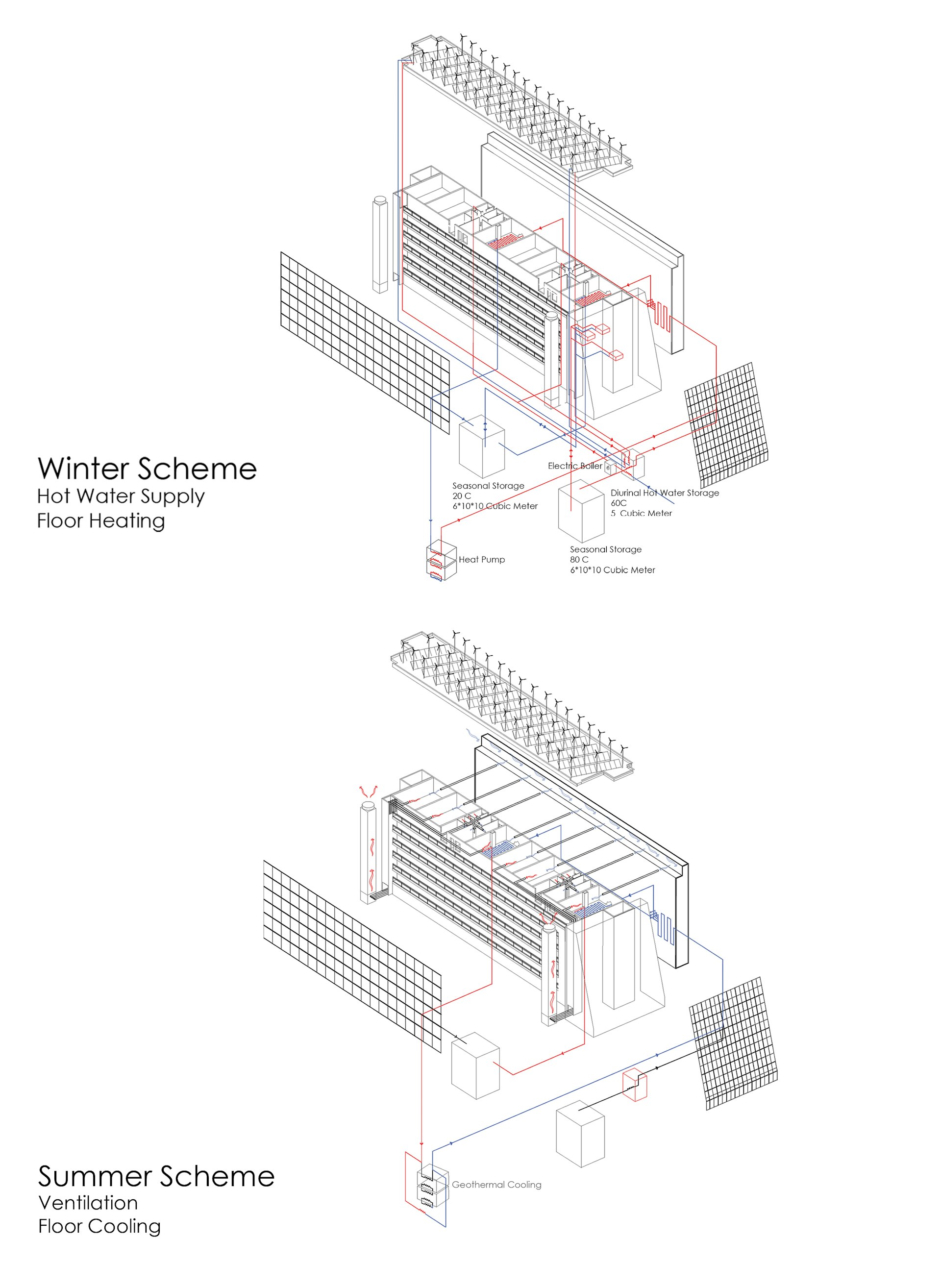
A core component of the proposal is the advanced thermal storage system. Heat accumulated in the greenhouse is extracted using Fiwihex devices and diverted to a seasonal storage unit capable of maintaining water temperatures up to 80 °C. This is complemented by a 20 °C cold storage unit and a high-efficiency heat pump (COP 4), ensuring consistent performance and demonstrating how integrated design technologies can successfully achieve energy neutrality.